Building Bridges in Leukocyte Biology Webinar Series
Through volunteer efforts, SLB will be offering a monthly series of innovative talks spanning a width breadth of interests related to the field. Registration is free for ALL. On-demand recordings are available for members only.
Our next speaker will be Manjari Trivedi, from Yale School of Medicine who will present “Macrophages provide essential cues for liver regeneration” on October 28th, 2026, 1pm eastern. This session will be presented LIVE-ONLY.
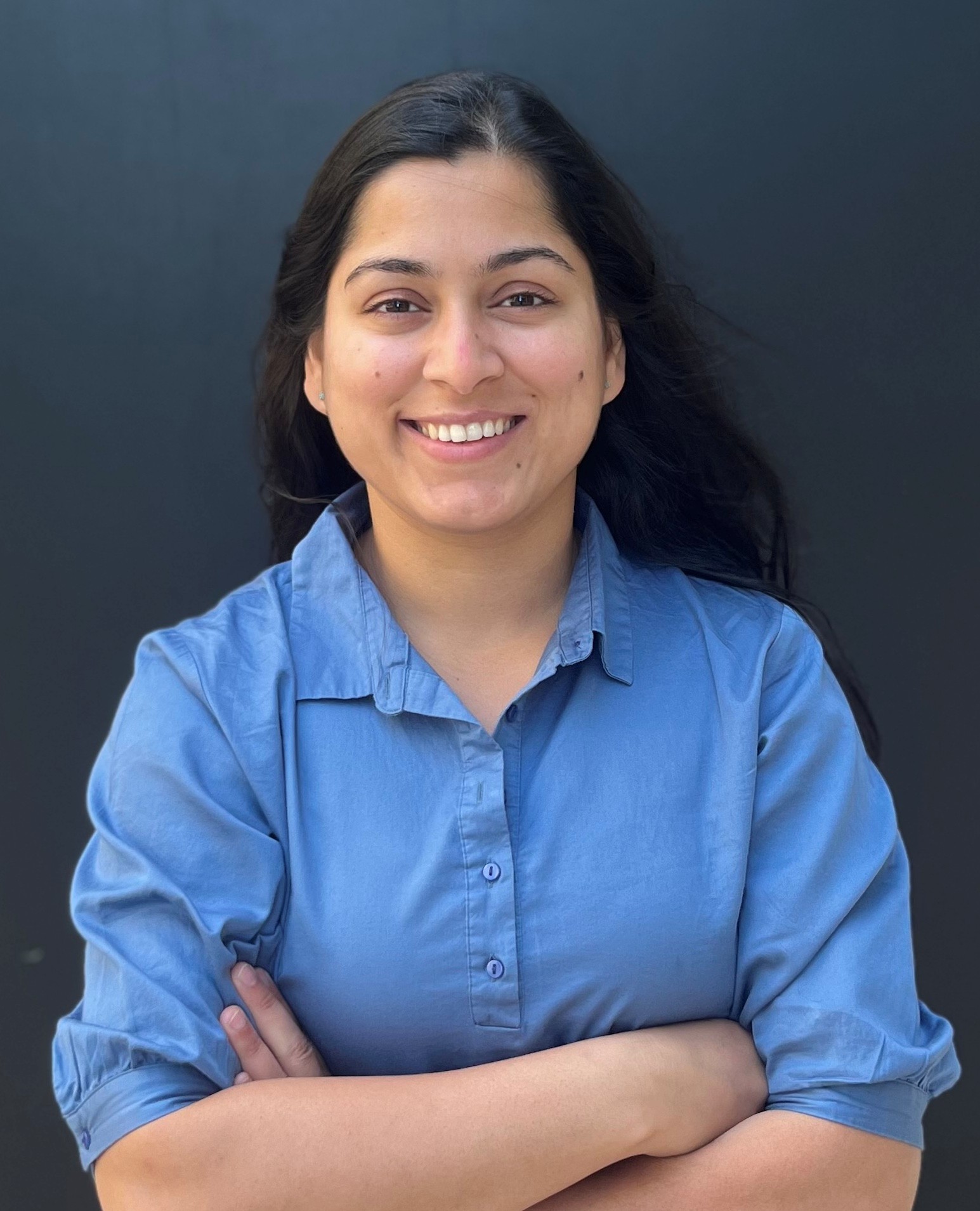 Dr Manjari Trivedi is an Associate Research Scientist at Yale School of Medicine. She studies how macrophages and neutrophils influence liver regeneration after acute liver injury. Her work so far has shown that initial acute inflammation is necessary for wound healing and tissue repair. She did her postdoctoral training in the Goessling Lab at Mass General Hospital, Harvard Medical School, and continued working with the team as the Goessling Lab moved to Yale in Summer 2026. Manjari completed her doctoral training at Imperial College London, UK, where she studied post-translational mechanisms that regulate TGF-beta signalling in human and mouse embryonic stem cells. She also did a Masters by Research in Biomedical Sciences at University of Glasgow, UK after completing her undergraduate training, which was in Biotechnology at VIT Vellore University, India. Dr Manjari Trivedi is an Associate Research Scientist at Yale School of Medicine. She studies how macrophages and neutrophils influence liver regeneration after acute liver injury. Her work so far has shown that initial acute inflammation is necessary for wound healing and tissue repair. She did her postdoctoral training in the Goessling Lab at Mass General Hospital, Harvard Medical School, and continued working with the team as the Goessling Lab moved to Yale in Summer 2026. Manjari completed her doctoral training at Imperial College London, UK, where she studied post-translational mechanisms that regulate TGF-beta signalling in human and mouse embryonic stem cells. She also did a Masters by Research in Biomedical Sciences at University of Glasgow, UK after completing her undergraduate training, which was in Biotechnology at VIT Vellore University, India.
Look for these talks lined up for the future...
- Amali Samarasinghe, UW Madison - November 18th, 2026, 1pm eastern
If you would like to present at a future SLB Building Bridges webinar series, please contact Sofia De Oliveira at [email protected]. See below for the full Building Bridges Webinar Series Mission.
Past Building Bridges Webinars available on-demand for SLB Members (login and membership required):
- Chyna Lovell, MASS General / Harvard "Lessons in Immune Homeostasis: The Goldilocks Principle" (live only session)
- Ronen Sumagin, Northwestern Feinberg School of Medicine "Neutrophil Plasticity in Gut Inflammation and Colorectal Cancer (live only session)
- Carlos Rosales, Universidad Nacional Autonoma de Mexico "Fc Receptor Signaling in Human Neutrophils"
- Andres Hidalgo, Yale University, Immunology Department "Understanding Neutrophils"
- Shruti Rawal, BWH Harvard "A microRNA mediated regulation of macrophage immunometabolism in diabetes-associated atherosclerosis"
- Stefan Oehlers, A*STAR ID Labs, Singapore "Differential subversion of host immune signalling by tuberculous and non-tuberculous mycobacteria"
- Margarida Santos Saraiva, i3S- Instituto de Investigação e Inovação em Saúde "Understanding tuberculosis pathogenesis and immune responses through the lens of Mycobacterium tuberculosis" (live only session)
- Silvia Uriarte, University of Louisville "Microbial Manipulation: Neutrophils Under Siege" (live only session)
- Carmen Gloria Feijoo, Universidad Andres Bello “Swimming into Neutrophil Heterogeneity: Lessons from Zebrafish”
- Samarth Hegde, Icahn School of Medicine; Hess Center for Science and Medicine, "Back to the Roots: Myeloid progenitor dysregulation fuels immunosuppressive macrophages in cancer" (live only session)
- Maria Casanova-Acebes, CNIO, "TREMMing on lung metastatic immunity" (live only session)
- Marta Mastrogiovanni, Albert Einstein College of Medicine, "Dissecting the role of embryogenic inflammation on Clonal Hematopoiesis"
- Juliana Zuliani, Universidade Federal de Rondônia "Cr-LAAO, an L-amino acid oxidase from Calloselasma rhodostoma venom, induces FPR-dependent vital NETosis in human neutrophils"
- Laurel Hind, University of Colorado Boulder "Inflammation-on-a-Chip: Redefining How We Study Immune Responses"
- Loic Rolas, Queen Mary University of London "Investigating vascular ageing and its impact on immune cell function: When neutrophils get mad!"
- Collins Osei-Sarpong, Institute of Experimental Pathology "Hepatic neutrophil extracellular traps limit dissemination of gut-derived products" (live only session)
- Hawa Racine Thiamm, Standford University, "Cellular Biophysics of Neutrophils – Learning from NETosis" (live only session)
- Irene Salinas, University of New Mexico, "Granulocyte recruitment in the African lungfish skin during estivation"
- Melissa Ng, Singapore Immunology Network, "Deterministic reprogramming of neutrophils within tumors"
- Savini Thrikawala, Clemson University,"Glucocorticoids suppress neutrophil control of Aspergillus hyphal growth in zebrafish larvae"
- Prashanth Thevkar Nagesh, BIDMC/Harvard Medical School, "In vivo Bruton’s tyrosine kinase (BTK) inhibition attenuates alcohol-associated liver disease by regulating granulopoiesis."
- Elsa Bou Ghanem, University at Buffalo, "Changes in Neutrophil-pneumococcal Interactions During Aging"
- Juan de Dios Ruiz Rosado, Nationwide Children’s Hospital “Phagocyte NADPH Oxidase: Fine-Tuning Neutrophil's Antimicrobial and Inflammatory Arsenal Against Uropathogenic E. coli”.
- Aminata Coulibaly, West Virginia University "Using Neutrophils to Modulate Brain Output"
- Elizabeth Wohlfert, University at Buffalo "Muscling through Chronic Infection"
Building Bridges in Leukocyte Biology Webinar
Mission
To provide a safe platform to highlight the research done by 1) trainees, 2) scientists from underrepresented groups in the field (please check footnote *) and 3) scientists with major caregiver roles at home that restrict their travel to conferences limiting their careers (young children, dependent person, etc). We also seek to keep the leukocyte community engaged in active and fruitful scientific discussions between conferences.
Vision
Conferences have a limited number of slots for presentations which drastically limits the amount of good science that can be shown and discussed in these venues. Trainees and young faculty from underrepresented groups in the field have less chances to be invited or selected to present their work at conferences and therefore their science has less visibility. We want to provide a way to give visibility to our members in the leukocyte field.In addition, we want to help build a dynamic and engaged leukocyte community to advance the field, this webinar series will also promote networking, collaborations and sharing of resources amongst the labs working with different leukocytes on different fields.
Webinar format
• Monthly meeting on ZOOM - 4th Wednesday of the month (tentative: 12:00 pm EST/9:00 am PST)
• 1h (5 min introduction, 45 minutes presentation ,10 minutes discussion)
Please note that presentations WILL BE RECORDED (with speaker permission), placed at SLB archive and available for all members to view at any time. Webinars will be promoted on the SLB website, email list and social media.
If you are a SLB member that fits the eligibility criteria and are interested in presenting at BBinLB webinar series, please submit the following materials to [email protected]:
• Abstract
• CV or Biosketch
• Provide specific information about eligibility (trainees, scientist from underrepresented groups in the field, and/or scientist with major caregiver roles).
|